

Timber vs composite fencing: which suits your garden and budget
If you’re looking at new fencing, you’ve probably already noticed there are two main options people talk about: timber fencing and composite fencing. We supply both here at Estate Sawmills, and the honest answer is this – they’re both great choices. It really just depends on what you want from your fence.
We’ve been supplying timber and fencing materials for over 40 years, and as a working sawmill, we’re involved in what we make and sell every day. That means we see how different fencing performs once it’s actually in the ground, through wind, rain and general wear and tear. So rather than pushing one option over the other, we usually start by talking customers through the pros and cons and letting them decide what fits their garden best.
Here’s how we tend to explain it.
Traditional timber fencing
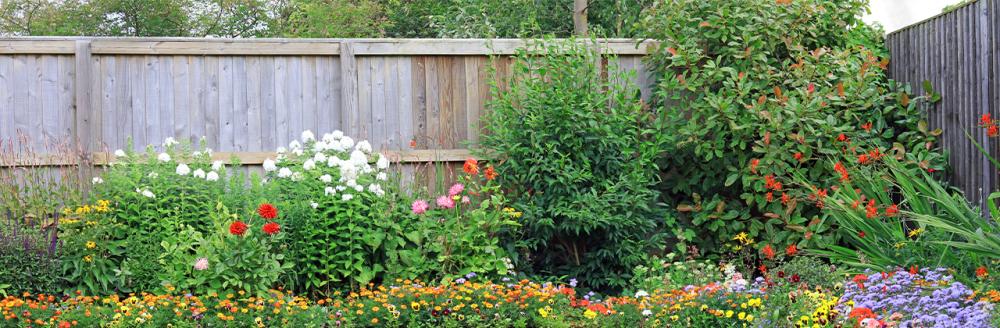
Timber fencing is still one of the most popular choices, and for good reason. It's a solid, traditional option. It looks natural, works in almost any garden and gives you plenty of flexibility when it comes to design.
All of our timber fence panels are made on site, which means they can be cut to size to fit whatever project you're undertaking like a glove. Whether it’s a straightforward boundary or something a bit more specific, timber is easy to adapt. You can paint it, stain it, add a trellis on top later, or repair sections if needed.
Cost and maintenance
From a cost point of view, timber fencing is typically the more affordable option upfront. That makes it a good choice if you’re working to a set budget or fencing off a larger area. The main thing to be aware of is maintenance. Timber is a natural material, and like anything exposed to the elements, it will weather over time. That said, all of our timber is pressure-treated, so it already has that extra level of protection built in.
Our pressure-treated timber is built for outdoor use and performs well, but it will need occasional maintenance over time. Staining, sealing, or painting helps keep it in good condition and looking its best. For most timber customers, that’s part of the appeal, as timber naturally develops character as it weathers. As long as you’re happy to spend a few hours on it now and again, it’s a straightforward job.
Modern composite fencing
If you’re not quite sure how composite differs from timber, it comes down to how it’s made. Composite fencing is produced using a mix of recycled wood fibres and plastic, giving you a timber-style finish with added durability and far less movement or weathering over time.
Because it’s engineered rather than grown, composite fencing behaves very differently to timber. It doesn’t rot, it won’t absorb moisture in the same way, and it’s far less likely to warp or split over time. That makes it a popular choice for customers who are looking for that 'set-and-forget' option.
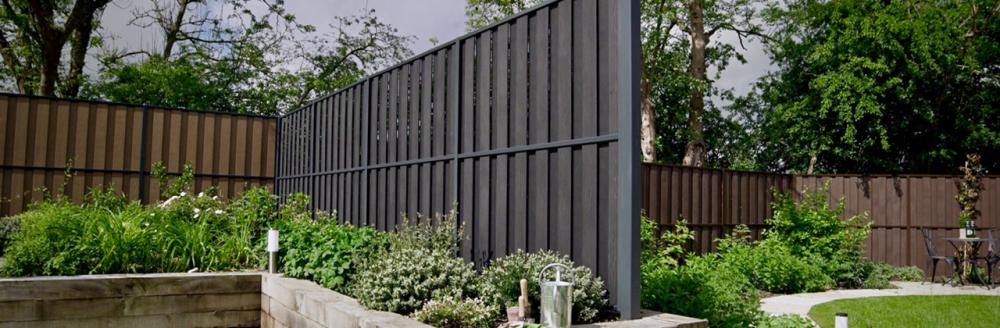
When it comes to looks, composite fencing is more versatile than people often expect. It works well in modern gardens, but it can sit just as comfortably in more traditional spaces too. The boards give a clean, consistent finish across the whole fence, making it a practical choice where a tidy, low-maintenance boundary is important.
Our composite fence panel kits
Composite fencing is usually supplied as a complete system, with boards, posts, rails and fixings designed to work together. Our composite fencing kits include everything needed to build a standard 1.8m x 1.8m bay, from the boards and aluminium posts to the top and bottom rails, fixings and finishing trims. Having all the components supplied together helps make installation more straightforward and guarantees a solid, consistent finish when fitted correctly. While composite doesn’t offer the same made-to-measure flexibility as timber panels built on site, it works very well for standard fencing runs and gives a clean, uniform result.
Cost and upkeep
Composite fencing does cost more upfront than timber, and there’s no getting away from that. For some people, that alone makes timber the better fit. Where composite starts to earn its keep is once it’s in and done.
Because composite contains plastic as well as wood fibres, it doesn’t react to the weather in the same way timber does. Rain, snow, ice and general damp conditions won’t affect it in the same way, and it won’t rot or deteriorate over time. That plastic content is what gives composite its longer lifespan. Put simply, it lasts a lot longer. There’s also no painting, staining or sealing to think about, just the occasional clean to keep it looking tidy.
That longer lifespan, combined with very little maintenance, is why composite fencing comes with a higher upfront cost. When you look at it over the years, factoring in time, treatments and upkeep, it isn’t necessarily the more expensive option in the long run.
In the end, it really comes down to your budget, what matters most to you, and how you want your fence to fit into your life. Some people are happy to maintain timber and enjoy the character it develops. Others would rather put the fence up once and not think about it again. Neither choice is wrong; it’s just about what works best for you.
So, which should you choose?
At the end of the day, both timber and composite fencing are solid, reliable options, and we supply both because they suit different people for different reasons. Neither is a better or worse option overall; it comes down to your budget, the look you want for your garden, and how much upkeep you’re happy to take on. If you’re unsure at first, that’s completely normal.
Whether you’re a trade customer or working on your own garden, our team is always happy to talk things through. You can visit us at our Bradford yard, arrange delivery, or just give us a call for some straightforward advice.
If you’ve got questions about timber fencing, composite fencing, or you’re not sure which way to go, just give us a ring on 01274 487882 or email [email protected]. We’re always happy!
 Processing