

4 signs your timber fence needs resealing
From heavy rainfall and frost to long spells of sunshine during summer, timber fencing works hard all year round. Constantly exposed to changing weather conditions, even well-installed fencing can begin to look tired if it’s not looked after properly.
For many homeowners, resealing timber fence panels becomes part of regular garden maintenance, helping preserve both the appearance and condition of the wood. The challenge is knowing when it actually needs doing. Leave it too long, and you risk damage; reseal too early, and you could end up doing extra work before the timber is ready. So how do you know when to act? Let’s break down the signs.
1. The colour has started to fade unevenly
One of the first things you’ll notice is a change in the fence’s colour. UV rays slowly break down the protective layer on timber, especially on fences that sit in direct sunlight all day. Rain then makes things worse by soaking into spots where the sealant has started to weaken. This means that panels that used to be rich and uniform might look pale or patchy. Some natural weathering is completely normal, but uneven fading often suggests that the original protective coating is no longer doing its job properly.
2. The timber feels rough or dry to the touch
Another common sign is a change in the feel of the timber. As the protective layer wears away, your fence panels can start to feel rough, dry or slightly brittle. You might also notice small cracks or splinters appearing along the boards, often near the tops of the panels where the weather takes the most impact. It doesn’t always mean the fence is failing, but it’s a clear sign the timber could benefit from resealing before things get worse.
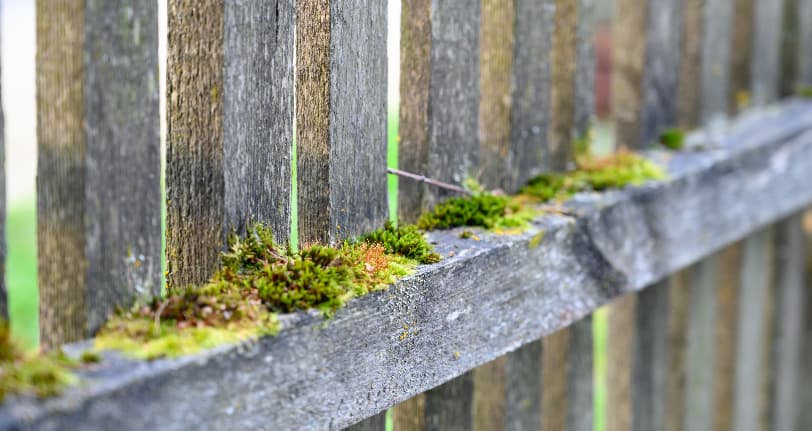
3. Moss, algae and mildew are becoming more noticeable
Shaded or damp areas often pick up algae or moss at different points in the year, especially during wetter months. A light build-up is fairly normal, but heavier growth can be a sign that your fence’s surface protection is starting to wear down.
When timber starts to hold onto moisture more easily, it creates the right conditions for algae and mildew to develop on the surface. Green staining, darker patches or slippery areas near the bottom of your fence panels can all suggest the timber is staying damp for longer than it should.
Cleaning the fence will usually improve how it looks in the short term, but if the sealant has broken down, the issue often comes back quickly. That’s why spring garden jobs like cleaning and resealing together can make a big difference, helping freshen things up while improving protection as the warmer months arrive.
4. Water isn’t beading on the surface anymore
A well-sealed timber fence should naturally repel water. That means that after rain, you’ll usually see it bead up on the surface before running off, rather than soaking straight into the timber. Once the sealant starts to wear, the wood begins to absorb moisture more easily. If your fence stays damp for a long time after rainfall, or darkens quickly as the moisture soaks in, it’s time to start planning a reseal.
How often should timber fencing be resealed?
In our experience, there isn’t a fixed rule that suits every fence. Things like how exposed your garden is, nearby trees, drainage, and the type of treatment used all play a part in how long a seal will last. As a general guide, many timber fences benefit from resealing every couple of years to keep them properly protected. More exposed areas may need attention a bit sooner, especially where they’re taking the full brunt of wind and rain.
One of the most common questions we get from our customers is, ‘How long does timber fencing last with regular maintenance?’ No fence lasts forever, but regular resealing helps to slow down weathering and keeps the wood in better shape for longer. Without this care, you risk problems like swelling or cracking, which could force you to deal with more frequent repairs or even premature replacement.
Resealing tips for timber fence panels
If you’ve spotted telltale signs that your fence needs resealing and you’re planning on adding it to your garden maintenance to-do list, remember: a bit of preparation goes a long way. It’s not a complicated job, but taking your time at the start will make the results last longer.
-
Brush off dirt, cobwebs and any loose debris before you start. If there’s algae or moss, use a suitable cleaner so the treatment can soak in properly.
-
Never apply sealant to damp wood; give the fence plenty of time to dry after cleaning or rain.
-
Aim for a dry spell with mild temperatures. Avoid very hot days or periods where rain is likely, as both can affect how evenly the sealant applies.
-
Work along the grain so the sealant absorbs naturally and gives a cleaner finish.
-
Use even, consistent coats rather than heavy, uneven layers.
-
Don’t forget the edges and tops, as these areas take the most weathering.
If your fence is ready for a refresh, you’re definitely in the right place. At Estate Sawmills, we stock a range of trusted timber treatments to help you get the job done properly. Worried your timber fencing might be past the point of simple garden maintenance? You can also explore our full range of premium timber fencing, which includes everything from sturdy overlap panels to elegant arched top paling.
Of course, if you’re looking for something that never needs sealing, composite fencing is well worth considering. Sleek and stylish, it’s a low-maintenance option that doesn’t require the same ongoing care as timber, and is perfect for homeowners who want a neat, modern finish without the regular upkeep.
Whatever you’re looking for, we’re here to help. With over 40 years of experience, we pride ourselves on delivering quality, affordability and first-class customer service every time. Don’t hesitate to give us a call on 01274 487882 or send us an email at [email protected] – you can also pop into our Bradford yard to speak with a member of our team in person.
 Processing